By Rosy Callisto

Creative industries include a variety of sectors which are centered around human creativity. One of them is Interior Design, which usually does not gather the attention that it deserves. It involves the planning, design, choosing the appropriate colors, furnishings and layout of interior spaces. The goal is to build an environment that improves user experience and provides solutions that meet people’s material and spiritual needs. It can further be divided into many specialized fields like corporate design, theater set design, museum and exhibition design, etc.
This sector seems to identify with the broad definition of design, as a problem-solver which gathers experiences to develop new ideas and meet the needs of people. But what distinguishes this field? Unlike other design industries like fashion design, this sector is not as much about your style as a designer, but more about that of your clients. In this industry, the choice and wants of your clients are superior. It could happen that an interior designer will never actually deliver a product that fits their preferences, because that is not the focus of this field. Interior design is way more technical and focused on functionality. These designers lack the freedom that other professionals in the creative industries have. As a professional, your designs must also adhere to the local laws, health and safety regulations, building and plumbing codes, etc. Moreover, this profession is way more complex than just beautifully arranging some furniture around the room. Interior designers must be highly educated, with a broad knowledge in topics like the structural formation of buildings, ergonomics, spatial concepts and computer-aided drawing software.
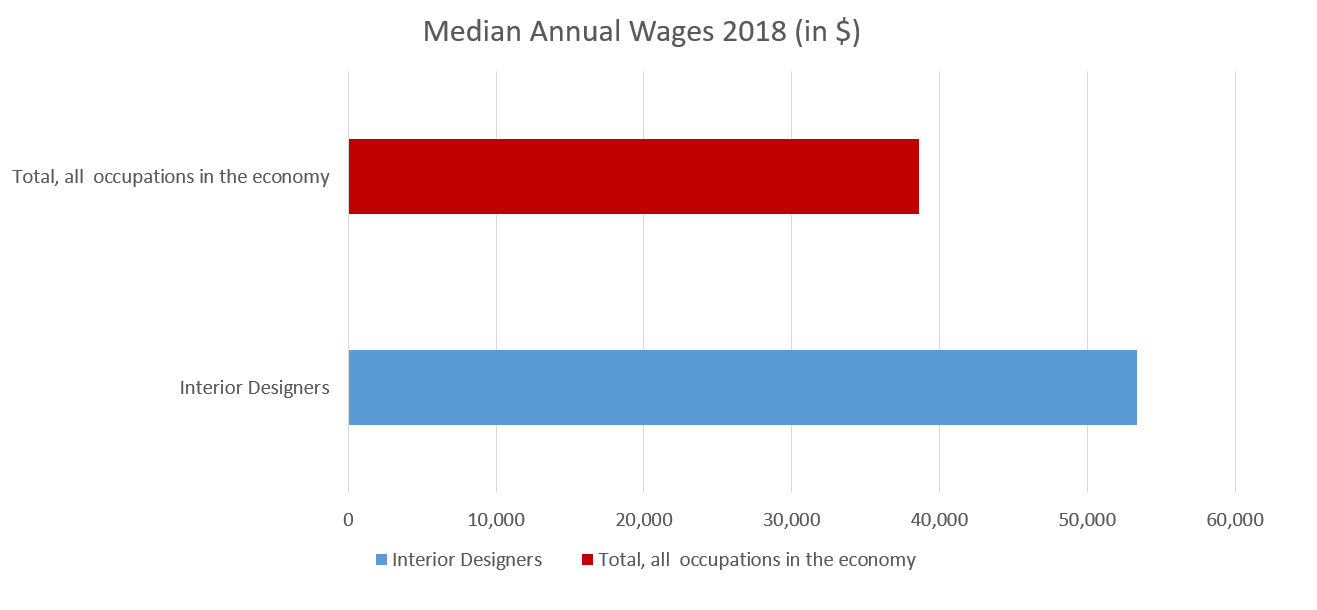
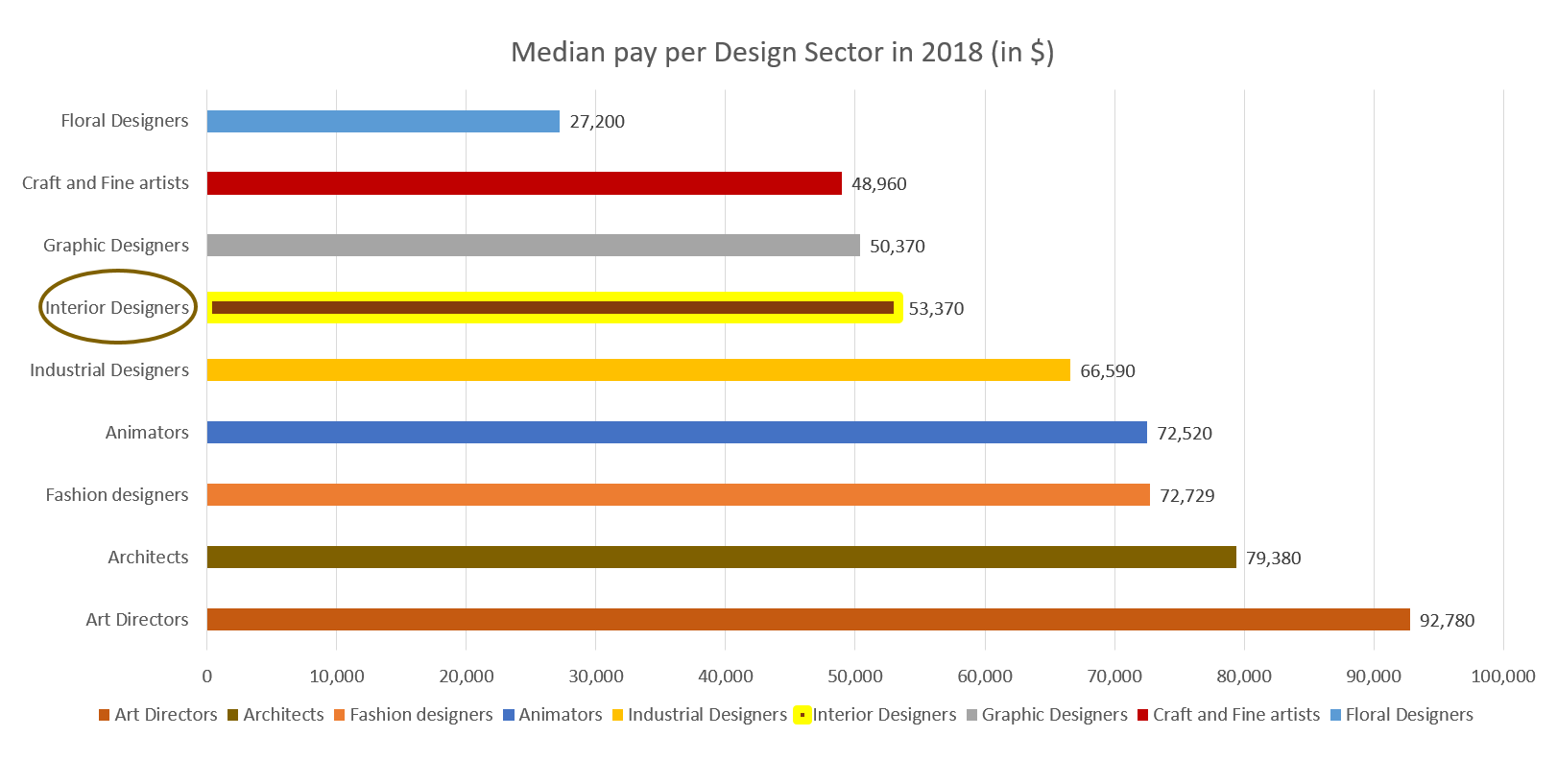
The industry remains highly competitive to this day, even though job opportunities are rising. When looking at the earnings, data shows that the mean annual wage for interior designers was $53,370 in 2018, with those working on specialized design and architectural firms having the highest earnings, while those in retail stores make the lowest. These figures might look quiet promising when compared to the mean wage of all occupations, concretely 38, 640$. Nevertheless, when you put it side by side with the other sectors of design, like architecture with a mean wage of 73,380$, it is one of the lowest paid fields. Despite this, it tends to have a higher growth in employment than other occupations. This come as a result of growth in homeowner health, tourism, popularity of home-improvement television, and the economy in general. Furthermore, demand in kitchen, bath, green design will continue to grow, and designers using the latest technology will be able to capture most of the market share.
The Interior Design is growing at an increasing rate and could soon turn into one of the most profitable markets, however that is yet to be witnessed.
 Making sense of art and design industries