The concept of “nothing but” theory is about of how everything is just a commodity with a logical confirmation that it has an economic value. I believe this loses more or less the power or value of the art itself. On the other hand, I do agree with what Alfred Marshall quoted about how “the desire to obtain anything that is ordinarily bought or sold for money is measured by the price that people are willing to pay for it”. Why this is natural to understand is that price and value are basically the same thing, but what about price and value in the art world? Isn’t there a difference?
Let´s consider two pieces of art that look exactly the same. On one hand in terms of form the two pieces are identical. On the other hand, let´s say one of the pieces is a 300-year-old painting while the other one is just a copy, but with a better structure. Some people will say that the 300-year-old painting is more valuable than the copied one. Other might disagree and instead just point out the price as their difference. Art is very individual, and I believe it´s about how you look at it.
Yes, it´s a huge correlation between the cultural- and market value. Of course, will many artists seek profit – preferably if that’s what they want to live off by. Like another theory known as the “hostile worlds” theory is a concept which is about the logic in the marked which again is fundamentally incompatible with the logic of art. Commensurable to price is not what defines art. Still art is not reasonable compared to other ordinary prices. This is why often galleries separate “front room art” from “back room commerce. They want to keep the dirty money separated away from the pure art, and it´s not uncommon that artists keep the economy hidden.
Still we can´t at the same time, one cannot help but mention that art can be both valuable financially and valuable culturally. These two theories assume that art already has its value measured before being measured. But it´s here were our idea of art gets affected by the valuation method. For instance, the copied painting can be measured with two completely different values depending on where the artwork itself got displayed and for whose eyes. If displayed in non-profit art space or a commercial gallery for example, it would most likely give two different approaches of how the value would be measured. It can be a lot more valuable culturally at the one place, while more valued financially another place depending the circumstance.
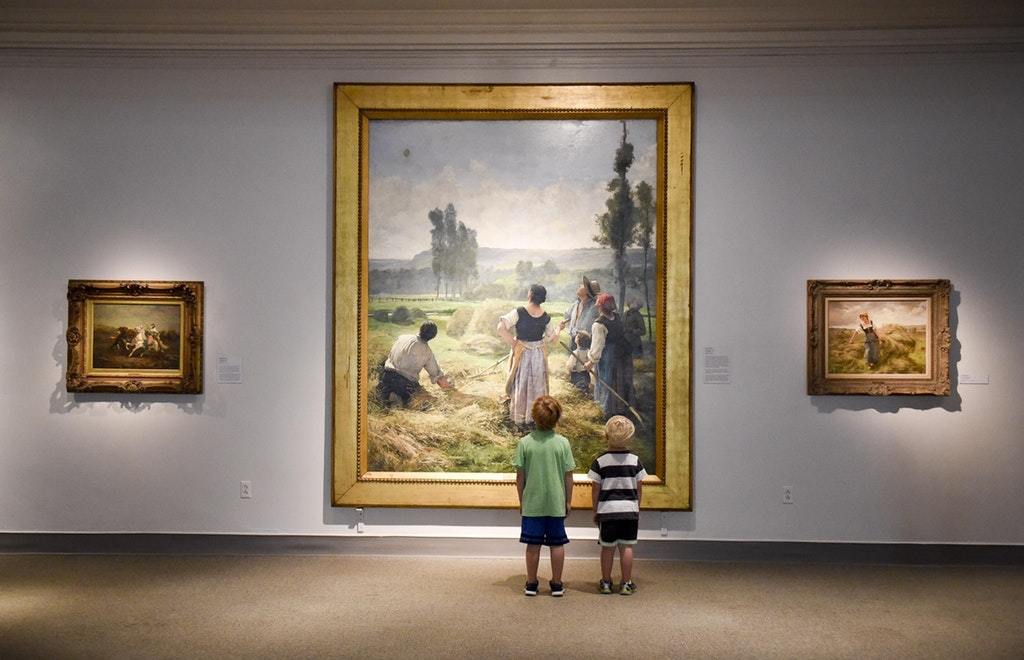
Mostly it depends on how you look at it. The 300-year old painting might have some aesthetic properties that the copied one doesn’t have, like originality. Some think that contributes to artistic value is the most valuable measurement, while others will say it’s based completely on how something looks visually. Maybe the copied one was on some part artistically better than the old one. Originality is still important, but then again maybe it´s not necessarily about the artistic properties, but rather the historical properties. Certainty will a historical property be more valued price wise. Rather then a right or wrong answer to this why can’t it just be up to the people among the artwork. Some believes in the aesthetic value rather than the visual value and vice versa, because artistic and ascetics values are often not the same. I believe art is supposed to be natural and so their concept of value.
References:
PP, Seminar 4, By Peter Booth
 Making sense of art and design industries